A thorough one identifies the pest, traces how it enters and what it feeds on, and concludes with a written finding. Describe what you saw through Call Now and an independent provider serving the Lynchburg area will take your call. The provider then explains what was found before anything is proposed.
What a pest inspection covers
- Interior: kitchen, bathrooms, laundry, garage, closets, attic hatch and crawl space or basement access
- Conducive conditions: wood-to-soil contact, clutter, food storage and trash handling
- Moisture: leaks, condensation, standing water and damp wood that attract insects
- Exterior: foundation, siding, eaves, vents, doors, windows, utility lines, fences, mulch and landscaping that touches the house
- Evidence: live pests, droppings, shed skins, frass, mud tubes, nests and chewed material
Inspections for a home sale
Lenders often ask for a wood-destroying insect inspection when a home is sold. The inspection records visible termite activity and damage and notes areas that were out of reach, and it offers no guarantee about the future. Find out who will receive the report and what treatment history exists.
Tools and signs an inspector uses
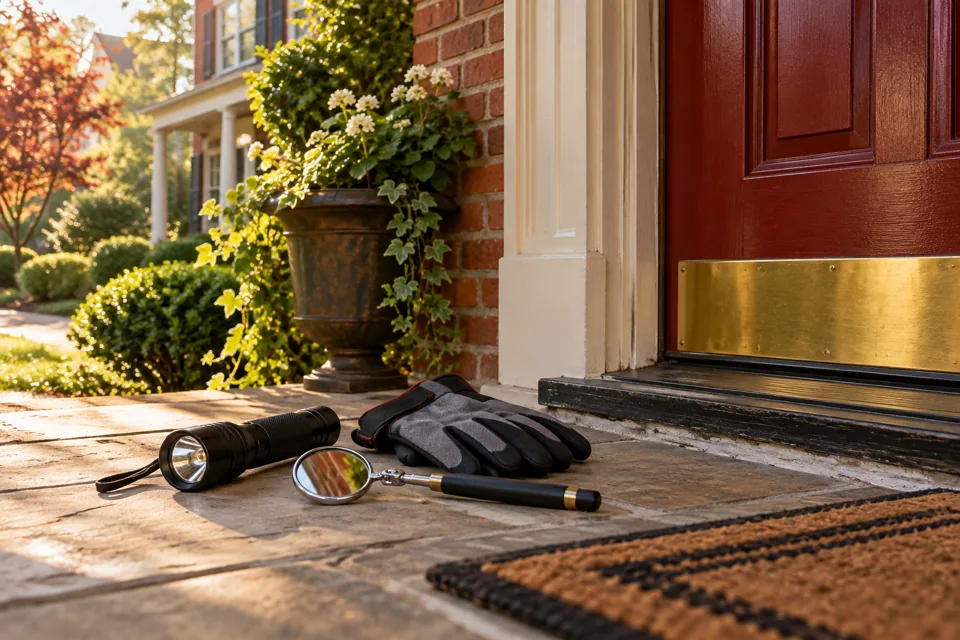
Tools like a probe for testing soft wood, sticky monitors, a moisture meter and a flashlight, plus a borescope or ladder in some cases, let the inspector see into voids, attics and crawl spaces. Each finding is linked to photos and notes, showing what was found and where.
What the written finding should say
- Which pests were found, or why none were
- Areas that could not be inspected and why
- Where activity or damage was seen and how far it extends
- How the pests are getting in and what is attracting them
- The recommended work, in order of priority, and what you can do yourself
How a pest inspection visit works, step by step
Pest visits that are done properly run in a fixed order, no matter which insect or animal is involved. Keep that order in mind when you talk to different companies, because a visit that leaves out the opening steps is the one to question.
- Inspection: the technician walks the outside first (foundation, vents, utility lines, eaves, fence lines, mulch) and then the inside (kitchen, bathrooms, garage, attic or crawl space).
- Identification: the species is named from the insect, droppings, damage or trail, because the right product and method depend on it.
- Plan: the provider explains what will be done, which products or devices will be used, and what you need to do before and after.
- Treatment or exclusion: the work is done in the places the inspection found, not by spraying every room.
- Follow-up: you get a date for the next check and a clear answer on what to report if activity returns.
Questions to ask before you agree to any pest inspection
- Which products, baits or devices will you use, and where will they go?
- How many visits are in the plan, and what happens if activity returns?
- What will you seal, remove or fix, and what stays my job?
- Who is on site, and can you show the state licence or applicator ID for the work?
- What will you write down for me: scope, exclusions, follow-up and product list?
What changes the scope of the work
Neighboring houses rarely need identical pest inspection work, because age, landscaping and moisture differ from one lot to the next. A good written scope names the factors that shaped the plan for your address and shows how each one widened or narrowed the work.
Two things make proposals easier to compare: a clear line between a single treatment and ongoing service, and a note of anything the technician could not get to. Scopes that name the places you were worried about, such as the attic, crawl space, garage or fence line, beat a generic package every time.
- Access to attics, wall voids, sheds, outbuildings and the yard
- Size and age of the home, and whether it sits on a slab, a crawl space or a basement
- How far the problem has spread and how long it has been active
- Whether you want a single treatment or an ongoing plan with scheduled visits
- Number of entry points, gaps around pipes and cracks in the foundation or siding
Prepare your Lynchburg home before the visit
Some simple groundwork before the appointment saves time during the inspection and gives the treatment a better chance of working, and you will not need to rearrange the whole house to do it.
- Tell the provider about pets, fish tanks, asthma, pregnancy or any health concern in the home so the plan fits.
- Clear a path to the garage, water heater, under-sink cabinets, attic hatch and crawl space door.
- Fix a dripping tap or wet spot you know about. Moisture feeds most household pests.
- Write down where you saw activity, what time of day, and when it started. Take clear photos or save a sample in a sealed bag.
- Put away food, pet dishes and children's toys from the rooms being treated.
What makes pest inspection different in Lynchburg
Lynchburg sits on hills along the James River in central Virginia, with many older brick homes on crawl spaces and basements. Virginia has a warm, humid summer and mild winters that keep termites, ants and carpenter bees active for much of the year.
Subterranean termites are common in the region, and wood in contact with soil or damp crawl spaces raises the risk. Fall brings stink bugs and cluster flies to sunny walls, and mice and rats look for warm crawl spaces and attics. Ask any provider how these local details change the plan for your address, because a method that works in one climate or housing style can fail in another.
Pest inspection across Lynchburg and nearby cities
Pest Control Lynchburg VA covers Lynchburg, Virginia and the surrounding area. Calls and requests also reach providers serving Forest, Madison Heights, Bedford, Amherst and Appomattox. Coverage is confirmed address by address, so say your ZIP code when you call.
To get going, press Call Now at the top of any page and tell the person who answers what you found. That puts you through to an independent provider nearby, and the provider verifies your address, looks the property over and writes up the scope.
Related help in Lynchburg
If this is not quite your situation, these pages cover the neighboring questions: Signs and inspection: pest control; Termite inspection and control; Rodent control; Comparing pest control quotes. The service area list shows every nearby city and ZIP code covered.